
At a workshop, all the tools and materials are provided, so you can show up almost empty-handed. How your rug turns out depends less on skill than on the design you choose and three tufting tips. Just knowing them ahead of time makes a real difference on the day.
Three tips for a good result
01 Keep the design as simple as possible
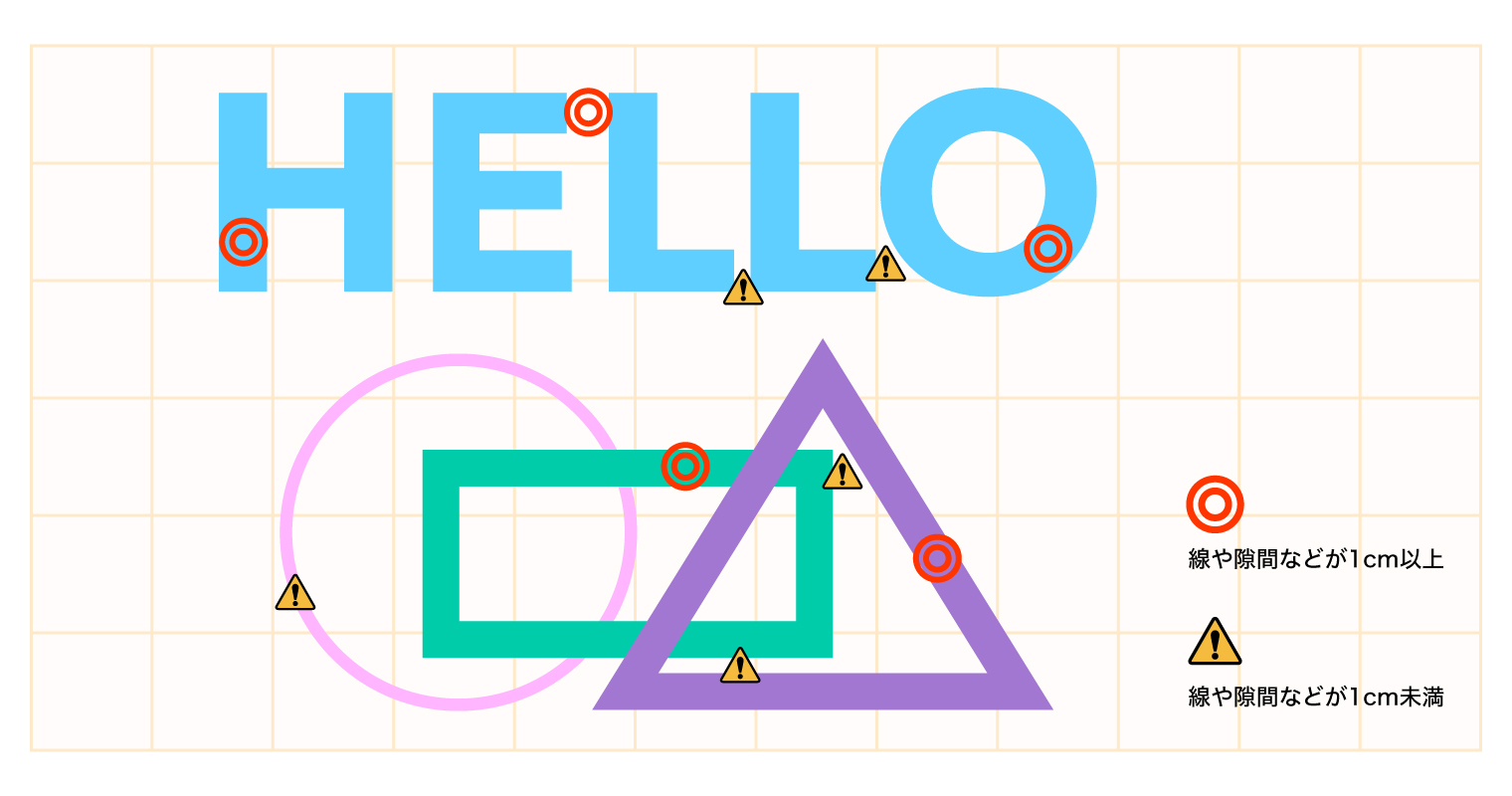
This is what makes the biggest difference. Tufting doesn’t handle fine detail well, so patterns, lines and gaps look best when they are at least 1 cm wide at full size. Thin lines, such as lettering, and detailed designs tend to blur, with colors bleeding into each other at the edges.
With limited time, fewer colors and larger areas will give you a result you’re happy with.
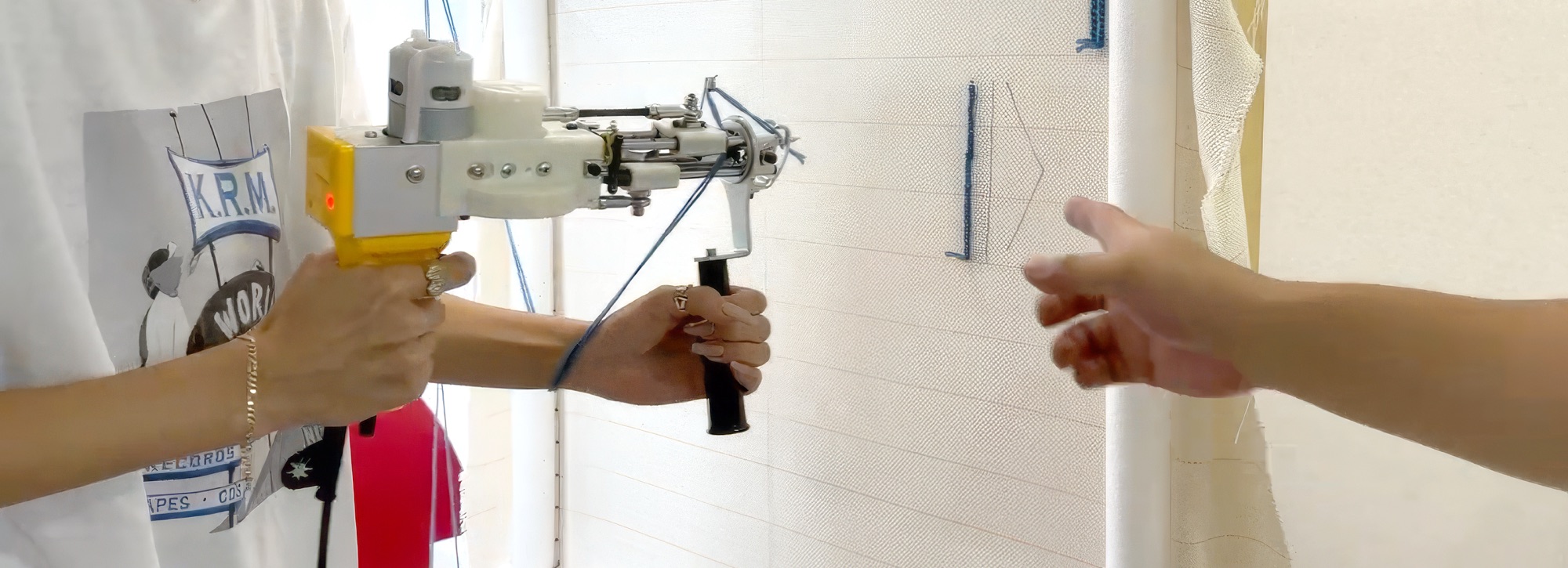
02 Hold the gun at 90 degrees to the cloth, with its foot flat against it
You’ll make fewer mistakes if you hold the tufting gun as close to 90 degrees to the cloth as you can. At an angle, the yarn doesn’t go in properly, or the cloth can tear.
The other key point is not to let the foot of the gun lift off the cloth. If it lifts, the cloth can tear or the yarn won’t go in properly. The trick is to keep pressing the gun firmly against the cloth as you go. At most workshops, the cloth is already stretched tight for you, so these two points are all you need to watch.
03 Don’t rush through curves and fine details
If you race through curves or fine details in one go, you lose control and drift off your design. Change the angle of the gun little by little and tuft in short, single bursts. Think of it as joining up short straight lines.
There are no rules about the order, but we recommend tufting the outline of each color first, then filling in the inside with straight lines. That way you’re less likely to go outside the lines when filling in, and trimming at the end is easier.
Common problems
- The lines come out wobbly
- You're going too fast. Tuft slowly in single bursts, especially for outlines, and the edges will come out clean too.
- The yarn doesn't go in neatly
- Press the gun firmly against the cloth so the foot doesn't lift. Pushing slightly in the direction you're moving keeps it steady.
- You run out of time
- Tufting itself takes the most time. A detailed design or lots of colors is where your time goes, so choosing your design is really choosing how you spend your time.
If in doubt, ask the staff
You can learn to use a tufting gun quickly, but how hard to press and how fast to move are things you only figure out by trying. The great thing about a workshop is that someone can watch you and help on the spot. If something doesn’t feel right in the first few minutes, don’t hesitate to ask. Fixing it early makes the rest much easier.
What to check before you book
You’ll use the studio’s tools and materials, so you don’t usually need to bring anything. Before you book, check four things: how long it takes, what size you’ll make, what the price includes (such as shipping if the rug is sent later), and whether you take it home the same day or it’s mailed to you afterward.
Some studios glue the back for you and some don’t, so check the booking page.
Tiny yarn fibers fly around, so we recommend wearing clothes you don’t mind getting yarn on. Tie back long hair, or bring a hair tie, so it doesn’t get caught in the gun’s motor.
Taking part with children
Some studios accept children from elementary school age. However, the minimum age varies from studio to studio. A tufting gun is a power tool with a needle that moves at high speed, so some studios require a parent or guardian to come along, or only allow a parent and child to make one piece together. Check the studio’s website or social media for its rules before you book.
Find a workshop in JapanFAQ
What can I make at a workshop?
Most workshops let you make a piece in a size set by the studio, from a coaster to a mirror frame or a rug. The sizes you can choose and how much freedom you have with the design vary by studio, so check the studio's website or social media before you book.
Can a complete beginner do it?
Yes. The basics of using a tufting gun take very little time to learn, and you'll get the hang of it quickly. At a workshop, the instructor shows you how to handle the gun and lets you practice first, so even people who don't think of themselves as handy soon feel comfortable.
Can I take part with my children?
Age limits and whether parents and children can take part together vary by studio. If you'd like to go with children, check the studio's website or social media for its rules before you book.
How much does it cost?
A workshop usually costs about ¥5,000–28,000, depending on the size of the piece you make. To start at home, the five basics (a tufting gun, a frame, tufting cloth, yarn and glue) come to about ¥51,000–86,000.